Students find themselves in law school for many different reasons. Some simply like to argue, others evade gainful employment with their undergraduate degrees, and yet others aspire to be one of the handful of bona fide, practicing constitutional lawyers. However, most law students would struggle to name a fellow classmate eager to one day leverage a zoology degree in the legal industry. And even that rare zoology-law student would admit to a near-0% chance of applying that hard-earned undergraduate degree.
Buc-ee’s vs. Mickey’s
Enter the venerable Buc-ee’s, Ltd., which decided to slightly increase that chance (to 1%?) by suing Coles IP Holdings, LLC earlier this year for trademark infringement. See Complaint, Buc-ee’s, Ltd. v. Coles IP Holdings, LLC, No. 3:26-cv-00414 (N.D. Ohio Feb. 18, 2026). You may ask, “are you referring to the Buc‑ee’s known for its toothy beaver logo, its clean bathrooms, its big billboards, and making my kids scream us into submission to pull over at the sight of said billboard.” Yes, that Buc-ee’s. You may also ask, “how could zoology be related to all of this?” Well, the answer is as easy as knowing the difference between a beaver and a moose. Or is it?
You see, Buc-ee’s alleges Coles’s use of moose logos (U.S. Ser. No. 99/262,130, et al.), in connection with the sale of goods and services through Coles’s Mickey’s née Mickey Mart retail stores, infringes Buc-ee’s beaver logos (U.S. Reg. No. 4,007,064, et al.). See id. at 8–9. Judge for yourself:


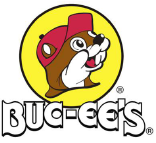

A zoologist may explain that beavers and moose (Meese? This zoology stuff is hard!) aren’t just different species, but are of different genera, families, and orders. So how could Mickey’s logos be an issue? The answer is that trademark law isn’t as clear-cut as zoology, at least in this context.
The Frisch Factors
Trademark infringement is assessed based on a likelihood of confusion test which is, not surprisingly, unrelated to animal genera, families, and orders. In the United States Court of Appeals for the Sixth Circuit, which includes the United States District Court for the Northern District of Ohio trying Buc-ee’s v. Coles, the “Frisch” factors for the test are:
- strength of the plaintiff’s mark,
- relatedness of the goods,
- similarity of the marks,
- evidence of actual confusion,
- marketing channels used,
- likely degree of purchaser care,
- defendant’s intent in selecting the mark, and
- likelihood of expansion of the product lines.
Abercrombie & Fitch Stores, Inc. v. Am. Eagle Outfitters, Inc., 280 F.3d 619, 646 (6th Cir. 2002) (citing Frisch’s Rests., Inc. v. Elby’s Big Boy of Steubenville, Inc., 670 F.2d 642, 648 (6th Cir. 1982)). Keeping in mind the Northern District’s guidance that the Frisch factors “imply no mathematical precision, but are simply a guide to help determine whether confusion is likely,” we’ll briefly assess the factors in order. Homeowners Grp., Inc. v. Home Mktg. Specialists, 931 F.2d 1100, 1107 (6th Cir. 1991).
Factor 1: Even the most ardent Mickey’s lover or Buc-ee’s hater would be hard-pressed to challenge the strength of Buc-ee’s marks. Buc-ee’s touts its reputation as the “Disneyland of convenience stores” and ties that fame to its marks. Complaint, Buc-ee’s, No. 3:26-cv-00414, at 4. One jury even deemed Buc-ee’s logo “famous,” which is a term of art. Verdict Form, Buc-ee’s, Ltd. v. Shepherd Retail, Inc., No. 4:15-cv-03704 (S.D. Tex. May 22, 2018), at 2. And Buc-ee’s isn’t afraid to rack up hefty legal bills to enforce that fame. More on that later. Winner: Buc-ee’s.
Factor 2: As is apparent from the parties’ assertions in their trademark applications, trademark registrations, and pleadings, both parties sell similar convenience store goods and services. Winner: Buc-ee’s.
Factor 3: Consult your zoologist friend and we’ll return to this factor.
Factor 4: Though Buc-ee’s provided exhibits to support various allegations, Buc-ee’s provided no exhibit to support its allegation that “Upon information and belief, consumers online have expressed confusion about whether a relationship exists between Plaintiff and Defendant.” See Complaint, Buc-ee’s, No. 3:26-cv-00414, at 8 and Exhibits A–E. Only discovery could elucidate that assertion and the factor in general, so we’ll avoid conjecture here. Winner: None (for now).
Factor 5: Buc-ee’s alleges similar trade channels, but cites no factual support. See id. at 7. Coles defends that Mickey’s stores are “small convenience stores in local communities,” whereas Buc-ee’s stores are “massive travel centers on major interstates and highways.” Coles IP Holdings, LLC’s Answer, Affirmative Defenses, and Counterclaims, Buc-ee’s, Ltd. v. Coles IP Holdings, LLC, No. 3:26-cv-00414 (N.D. Ohio Feb. 18, 2026), at 22. The clever and perhaps-novel “size matters” argument notwithstanding, both parties’ stores are brick-and-mortar stores on the sides of roads. Winner: Buc-ee’s.
Factor 6: The purchaser is presumed to be a “typical buyer exercising ordinary caution.” Homeowners Grp., at 1111. However, a purchaser with expertise or sophistication is “expected to exercise greater care” so that “there is less likelihood of confusion.” Id. For example, purchasers of fast food are “unlikely to employ much care,” while purchasers of homes “will display a high degree of care.” Bliss Collection, LLC v. Latham Co., LLC, 82 F.4th 499, 513 (6th Cir. 2023). Both Buc-ee’s and Mickey’s sell convenience store food and other goods, meaning their purchasers are less sophisticated (the writer and his family take no offense) and there is a higher likelihood of confusion. Winner: Buc-ee’s.
Factor 7: While Buc-ee’s alleges an “intent to cause confusion and to trade on Plaintiff’s vast goodwill,” Coles alleges use of the “Mickey’s” name in Ohio since the 1980s, well before Buc-ee’s entry into Ohio earlier this year. Less clear is the timing of Coles’s use of Mickey the Moose in its life-size grandeur and its humbler logo form. Coles alleges such use only for a “long” time and “over the years.” In addition, Buc-ee’s implies Coles’s transition from “Mickey Mart” to “Mickey’s” was an intentional move closer to Buc-ee’s marks. Like with factor 4, discovery will be decisive. Winner: None (for now).
Factor 8: The goods and services already overlap, so this factor is moot. Winner: Buc-ee’s.
Factor 3: This factor promises to be the most hotly-contested factor. Indeed, this factor is given considerable weight. Daddy’s Junky Music Stores, Inc. v. Big Daddy’s Family Music Ctr., 109 F.3d 275, 283 (6th Cir. 1997). Buc-ee’s emphasizes how Mickey’s logos “incorporate a cartoon animal facing right with wide eyes and a smile, overlaying a round background,” and how Mickey’s logos now use the name “Mickey’s.” Complaint, Buc-ee’s, No. 3:26-cv-00414, at 6. As expected, Coles highlights its logos’ different colors, shape, and content, succinctly stating “A moose is not a beaver.” Even though the use of a different animal doesn’t by itself avoid confusion, here the different animal, along with the different colors and shape, seem to yield a different overall impression. And we probably didn’t need your zoologist friend to clarify that. Winner: Coles.
Buc-ee’s vs. The Animal Kingdom?
Not settling for mere moose hunting, Buc-ee’s bloodlust has extended to the greater animal kingdom, specifically:
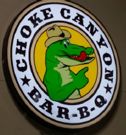
Alligators (v. Amjad Panjwani):
Bears (v. Teddy’s Market, LLC):

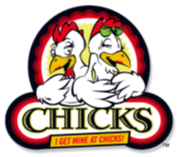
Chickens (v. Ray V. Hansen):
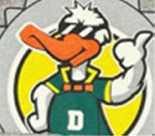
Ducks (v. 2 Wiseman Enterprises, LLC):
Puppies 1.0 (v. Super Fuels Lombardy, LLC):

Puppies 2.0 (v. EJL Acquisitions, LLC):

Though puppies seem to be squarely in the crosshairs – poor, sweet puppies – the alligator took the worse shot. The alligator case proceeded all the way to trial, and the jury found in favor of Buc-ee’s infringement claim, surprising many. Verdict Form, Buc-ee’s, No. 4:15-cv-03704, at 1. An appellate court hasn’t weighed in on that case or the other cases, but the obvious question is whether a court will allow Buc-ee’s to prey on all animals. What about humans? After all, your zoologist friend will remind you that humans are part of the animal kingdom, too.
A Difficult Balance
Beyond the narrow legal question lies the broader, squishier issue of image. Buc-ee’s ubiquitous beaver and overall motif evoke feelings of fun and family, wailing kids notwithstanding. Buc-ee’s extols the loyalty its brand inspires. See Complaint, Buc-ee’s, No. 3:26-cv-00414, at 2. No doubt Buc-ee’s expends considerable resources to build all of this goodwill. But weighing on the other scale is protection of that goodwill. Indeed, failure to police a mark can weaken that mark. See Homeowners Grp., Inc., 931 F.2d at 1008 (“extensive third-party uses of a trademark . . . substantially weaken the strength of a mark”).
A mark owner must therefore carefully balance building and protecting its goodwill. While most lawyers and public relations professionals couldn’t predict that any one suit would significantly harm a company’s goodwill, the modern news cycle sometimes yields intense and surprising responses from the public. A single case could be viewed as over-reaching or bullying, changing perceptions overnight. In short, a mark owner should choose its hunting grounds carefully, lest it make a critical moose-take.
For businesses seeking to protect valuable brand identity, a thoughtful trademark enforcement strategy can help preserve goodwill while reducing the risk of costly disputes. Contact Conley Rose to discuss how your organization can strengthen and protect its trademarks in a competitive marketplace.